5.27.2017

1959 Series 62 Convertible Cadillac 390 V8 Automatic


It was Cadillac day at Larz Anderson transportation museum recently, and I found myself gravitated rather quickly to this 1959 Cadillac convertible.  It's a real beauty.  

Wish I'd been able to look under the hood, at that 390 cubic inch 325 horse power engine. And those tail fins... wow! Check them out in a couple of the photos further below.


5.20.2017

Photo Story: Wild Mountain Goat on Hurricane Ridge, 1976, Olympic National Park

Let's hear it for Kodachrome 64 and my old Nikon EL with it's 58 mm Nikkor F1.4 lens!  This is one of my dozen or so favorites from the 1970's.  For those that don't know this, Kodachrome was slide film with an ASA (ISO) of 64.  It came in rolls of 24 and 36.  Here the slide has been scanned to a 10mp file and then downsized to 750 pixels wide for blog posting.  I recently made a 24" print for my younger son, and it is plenty sharp.

"Mountain Goat"
Hurricane Ridge, Olympus National Park, 1976


Nikon EL film camera, Nikkor 58mm F1.4 lens
Shutter speed unknown, F stop unknown
ASA 64 (Kodachrome 64)

This image was taken on Hurricane Ridge in Olympic National Park in July, 1976.  That was more than 40 years ago!

Mountain goats are not indigenous to the area. They were introduced in 1920, eighteen years before the area became a national park. I'm not sure how many were living in the park when I took this picture in 1976.  However, I have read that in 1983 there were approximately 1,100.

I love wild animals but it seems that the Park system is trying to figure out what to do with these animals, as it is reported that they are overgrazing the delicate alpine vegetation and soil.

Incidentally, seen in the distance, beyond the snoozing mountain goat, is Puget sound and Vancouver Island, Canada.

5.13.2017

Photo Story: Tons of Maple Tree Helicopters


Our property is surrounded by maple trees.  One of the beautiful things that happens in the spring is that the maples sprout large quantities of little “helicopters”, as we called them as kids. In reality these are seed pods, and they appear before the new maple leaves arrive.

Beautiful colors eventually turn to brown:

Beginning with rich colors of green, pink, red and yellow, the helicopters eventually dry out and loose their color, instead turning to a dried-out tan or brown color.  At that point they loose their touch with the stems to which they’d been attached, and drop to the ground in a twirling motion.  This action is why they are often called helicopters or whirligigs. Where they drop will depend on the wind, as it is often high winds that “set them free”.

"A Squadron of Maple Whirligigs"
Olympus EM-1 with 12-100mm F4 zoom @ 54mm (108mm-equiv)
1/100sec, F4, ISO 200
Processed with Lightroom and Perfectly Clear

A reason for concern:

Of particular concern, however, is the number of helicopters produced.  This particular tree is so dense with seed pods. It’s a “bumper crop”.  But that may not be a good thing. We’ve had drought conditions the last few years and I have learned from an arborist that producing a bumper crop of seeds is often a tree’s way of continuing the species during times of stress, and before the tree dies off.

5.06.2017

Photo Story: Driving Through Kansas in 1975


In the summer of 1975 I spent a couple of weeks traveling the USA with my graduate school roommate.  He’d driven to the west coast from Connecticut to deliver his younger brother to (as I recall) the University of California at Berkeley.  I, on the other hand, flew into Los Angeles for the purpose of riding shotgun for the drive back to New England in his green Mercury Capri sedan via Nevada Arizona, Utah, New Mexico, Colorado, Kansas, and from there pretty much straight through to Massachusetts where he dropped me off. The experience was terrific… all except the night I spent hanging over a toilet in a campground in Colorado after consuming burritos and refried beens in a hole-in-the-wall restaurant in Silverton, CO.

"Kansas"
 Along Interstate 70 in 1975
Kodak Retina IIIC rangefinder film camera
50mm Focal Length
Kodachrome 64 (likely)

This photo represents my (unfair?) view of Kansas.  Flat as a pancake and a highway as straight (almost) as an arrow.  This photo was taken along Interstate 70. My recollection is that we were near Salina, and it was just after a thunderstorm blew through.  

One of my strange recollections is of spending the night in a campground off the highway.  We pitched the tent in a field. Usually, we would pound the tent pegs into the ground with any nearby rock.  But in Kansas we could find no rocks! Growing up in New England where farm fields are often lined by stonewalls, I found this rather amazing. I also remember it blowing like crazy all night and wondering if small dogs and young girls were flying through the air on their way to the Land of Oz.

4.21.2017

Photo Story: To Spritz Or Not?


When I first became interested in flower photography, it never occurred to me to do anything artificial to the flower.  I was amazed when one friend told me of clipping a flower with stem, and bringing it indoors to photograph without wind and with controlled light and with an artificial background (ex. white foam board or black velvet fabric).  What a great idea that was. That strategy for creating good art had never occurred to me.  Another friend told me about using a spritzer bottle in the field to add the very appealing effect of raindrops or morning dew.  


"Droplets"
Olympus E-M1 plus 60mm F2.8 Olympus macro
1/100sec @ F8, ISO 200

I definitely like the raindrop effect. It gives a little “something extra” to the image. But I have never actually taken the additional step of procuring a spray bottle and adding it to my gear bag.  

So, this image is completely natural.  It was taken outside my home after, you guessed it, a real rain shower. Perhaps a spritzer bottle in the hands of an experienced spray bottle aficionado could duplicate the appearance, but I’m thinking that may not be possible. I love the way the raindrops have lined themselves up nicely along certain lines on the blades of grass.

I do think that during this coming season of outdoor flower photography I will add a spray bottle to my kit.  It's worth playing with, and it should add some fun. On the other hand, using it seems a bit like catching a stocked trout instead of a wild trout. The wild trout is definitely a higher quality experience. Yet, it should be said that a stocked trout is better than no trout at all!

4.19.2017

Photo Story: 8-Year Olds Love Chalk


Give an 8-year old some colored chalk and a paved driveway and it’s all about art and creativity. 

I think the above was the best of a ton of images I took of our granddaughter during her stay with us Monday and Tuesday. The background and foreground give a sense of the environment, without being distracting (IMO). I think that is a good thing. The 90mm F2.8 lens helped a great deal with blurring the background to help focus attention on the smiling 8 year old. Some vignetting might be useful, but I don't seem to use that technique much.  I feel I captured “the moment” here, and I especially like that it was done with an old manual focus, aperture ring manual lens.  

I used a 90mm Tamron F2.8 Macro (at F2.8, 1/500sec, ISO 100) mounted on a Sony a6000.  I am always pleased when I can get good focus with any manual lens; although, of course, our granddaughter wasn’t exactly in motion!


What was really amazing about this artistic experience is that we gave her the option to go to our local ice cream parlor for an ice cream cone before returning her to her parents, and she actually asked, “can I finish up my art project instead?”  Amazing girl.

BTW, buy triangular chalk sticks for your kids or grandchildren.  We’ve concluded that they don’t break as easily as the round ones. Ours are called “Chalkables”, and we just ordered more from Amazon.  The brand is OOLY.  They come in a box with 8 colors.

4.09.2017

Gear: Best $11 Gift I Ever Received (For Macro Photography)


I saw one of these folding stools a couple of years ago at the gym.  I immediately fell in love with it and thought it would be great for my macro photography.  I mentioned it to my wife a few days before my birthday in 2015 and as I was opening birthday cards on a Sunday morning, a U.S. Postal Service truck pulled into our driveway and delivered a Rhino II folding stool!  Wow.  What a surprise.  My wife had ordered it on a Friday and with her Amazon Prime membership got it delivered on Sunday! [Apparently, Amazon is so big that it has a special deal with the postal service which includes Sunday delivery.]


It’s called a Kikkerland Rhino II Folding Stool and they sell for about $11 on Amazon with free shipping.  The version II is sturdier than the original design so be sure to get the Rhino II model.


When folded, it measures about 12”x 12” x 1", so it fits nicely in my backpack.  I mostly use it for macro photography.  For me, this means either wildflowers growing in nature or cultivated flowers growing in botanic gardens. 

Flowers, by their design, tend to lie low to the ground, and this stool really helps me get down to the level of the flowers without resorted to sitting crosslegged on the (often wet) ground, or getting on my knees. My joints feel a lot less “creaky” at the end of a session. It makes the process a lot more enjoyable, whether you use a tripod or, like me, avoid a tripod whenever possible.  I find the stool helps me hold the camera steady.  Often I will put my elbows on my thighs, creating a “human tripod”. 


When in the field, once I have taken the stool out of my backpack, I generally don’t put it back.  When folded, It’s so easy to carry by the handle.  


When not used for my photography, I usually just keep it in my car.  It takes up so little space. We now have a second one in the house.  It comes in handy for changing lightbulbs in the ceiling or swapping out batteries in the smoke detectors, and then folds up nicely to be hidden in a closet (or, in our case, between the washer and dryer).

Hey, it's only $11.  Buy one!


4.01.2017

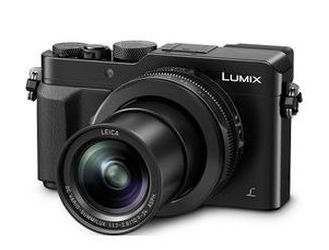
Gear: LX100 At Discount, But I'll Wait For An LX200 (Assuming There Will Be A New Version)


When the LX100 first came out (September, 2014) I was quite excited.  All those retro dials in a smallish format.  Plus it had a mFT sensor which was pretty big for the small size of the camera and the small size of the fixed 24-75 mm-equivalent F1.7 to F2.8 (i.e. fast!) zoom. Albeit the sensor was cropped to about 12mp, but this was fine with me as it accommodated the mult-aspect ratio feature we’d come to know and love with the LX series.

Screenshot from Panasonic website
shop.panasonic.com

I guess what caused me to put a purchase on hold was the price tag of $899US… and to be honest, I was concerned with some of the reports that seemed to indicate some lens softness. I have to admit that lens sharpness is a “thing” with me.  Intellectually, I know it is overrated and that there are so many more important elements that go into making a good photo.  When it comes down to it, I think almost all modern lenses are “sharp enough” and fully “sufficient”, even slow kit lenses. Nevertheless, lens sharpness is always a hurdle for me.

At any rate, because of these concerns, by the end of 2014 I removed the LX100 from my radar screen.

But then a couple of weeks ago, I had another chance to reconsider.  Not only was the LX100 on sale at a trusted seller, Amazon, but they had plenty of them in stock and “more coming”, priced to sell fast at $560 with free shipping.  This was 30% below the retail price of $799 and 40% off the initial retail price of $899! Unfortunately for anyone reading this now who might be interested in buying at that price, this deal has come and gone and the current selling price at Amazon (on April 1, 2017) is $699. 

This was the $560 deal (now gone):


Screenshot from Amazon a few weeks ago.

Currently priced on Amazon at $699:


Screenshot from dpreview.com

However, I was unable to hit the buy button, even at $560.  It seems that a lot has changed in my mind with regard to an appropriate feature set.  Obviously, the camera still works as well as it did when introduced in 2014, when it received an 85% “gold award” from dpreview.com.  But my wish list for features and requirements seems to have expanded over the last 2 1/2 years.  That’s not a good or bad thing, it is just what is.

In passing up on this sale, I also considered that perhaps the heavily discounted price was a sign that a new model (LX200?) is coming.  I am hoping that the LX100 was successful enough that it warrants an upgrade. 

What would really kindle my interest in the next version of the LX100 (if there is one coming along) is one or more of the following “improvements”, listed here in order of my interest:

(1) A bigger EVF, preferably OLED so I can see through it with polarized glasses.  The bigger EVF can be accomplished in appearance without increasing the physical size by changing the EVF to a 4:3 aspect ratio instead of the current 16:9. I understand that the GH series has an OLED viewfinder with 4:3 aspect panel.

(2) Tilting display with touch screen capabilities.

(3) A new lens, equally fast, perhaps longer (24-90?, 24-105?) and sharper than the current one.

(3) Better image stabilizing. Gordon Laing was disappointed to find in his review on cameralabs.com that the stabilization system only provided a 2-ish stop advantage where he’d expected more like 3-4 stops.

(4) ND filter built in.

(6) A 20mp sensor ...which would need to be cropped to about 15mp to accommodate the multi-aspect ratio feature.

(5) Ability use a self-timer and bracketing at the same time.  I think currently, like other cameras I’ve owned from Panasonic and Olympus, the self-timer and bracketing are in the same drive mode so that you can choose only one or the other. (The work-around is to use a remote shutter release.)

(6) All the photo stacking and photo bracketing features that are now included on the upper end Panasonic’s.  I think the LX100 may have photo bracketing, but not photo stacking.  There were hopes for a firmware upgrade to accomplish this, but as far as I can tell that never happened.

(7) Blue Tooth for easy fast transfer to my cell phone for sharing. (I don’t have any cameras with this, so not exactly sure how advantageous this is… but it seems to be the direction upscale cameras are heading)

I guess that's a healthy list of "improvements".  I'm looking forward to seeing what Panasonic comes up with next.


3.26.2017

Photo Story: The Wharf at Thurston's Lobster Pound, Bernard, Maine


Thurston's Wharf

Olympus E-M1
Olympus 12-40mm F2.8 @ 15mm (30mm equiv.)
1/60s, F8, ISO200
__________

Photo Story

I recently picked this image to submit for a Photo Club critique.  Not sure why I picked it. It certainly isn't a "fine art" image.  I guess it is more of a documentary image. But I like it a lot, and I thought I'd post it here along with a bit of the Bernard story.

Thurston's Wharf and Thurston's Lobster Pound are located side-by-side in the Village of Bernard, Maine on Mount Desert Island (MDI), Maine.  MDI receives millions of visitors each year because of Acadia National Park. However, I should point out that Acadia is mostly on the right side of the island, along with the heavily visited Bar Harbor.  Bernard is on the left side of the island.  The left side is often called the "quiet side".

We've traveled MDI off and on for thirty plus years and have always enjoyed our visits.   But it was not until three years ago that we found (accidentally) the road that leads to Bernard. It barely exists on the maps but is worth finding.

The main attractions in the immediate area around Bernard seem to be Bass Harbor and Bass Harbor Head Lighthouse.  The lighthouse is on the to-do list of any serious photographer and the village of Bass Harbor (confusion here: there is the harbor call Bass Harbor; the village called Bass Harbor lies along the eastern shore of the harbor) is the terminus for the Swan Island Ferry and the Frenchboro Ferry. Access to the lighthouse, the ferries, the village and the harbor is along route 103.  

On the “other” side of the harbor is the Village of Bernard, where this photo was taken. To see the village (and dine at Thurston’s!) you will need to get off route 103 and head south on a secondary road called, you guessed it, Bernard Road. It's easy to miss. If you are in the  area be sure to put Bernard into your GPS or cell phone navigator.  The GPS  coordinates are: Latitude 44.240766; Longitude -68.352143.

Bernard is a fishing village.  Our first visit there was about 3pm in October a few years ago.  At that hour the lobsterboats were streaming into the harbor with the day’s catch. It was great fun to watch the unloading of lobsters. However, this particular picture was taken during a subsequent visit. It was 1pm when this photo was taken, just minutes after we dined on Lobster Rolls at Thurston’s.  

Before I forget, Thurston’s has a great tag line: “Thurston For Lobster”. Get it?  Thurston, as in thirstin’!

3.19.2017

Photo Story: Second Blizzard of the Season


Blizzard Conditions

Olympus E-M1
Olympus 12-100mm F4 @100mm
F8, 1/15sec, ISO200
__________

Photo Story

We had our second blizzard of the season last week.  Cancelations (including our local schools and my workplace) started the night before, as the storm was predicted to arrive just in time for the morning rush hour and to be heavy right through the evening rush hour.  We were right on the border between a predicted 12-18” snowfall and an 18-24” snowfall. Ultimately, we ended up with 12" of windblown, wind-packed, rain impregnated snow. 

Laurie and I had no reason to drive anywhere … so we didn’t. And except for photographing this scene, we stayed indoors, watching the storm develop while sitting by a comfy fire. Our generator was all gassed up in case we needed it, but we never did lose electric. 

Wind gusts reached 60mph, but our trees stayed upright. I would say "just" a few branches lay around the yard when it was all done, except that one of the branches with a 2" diameter was buried under the snow in the driveway.  After hitting that with the snowblower, I was glad I had an extra shear pin!

I mentioned at the top of this post that this was a blizzard.  I always like it when the meteorologists remind us of the technical definition of the term, as I always forget.  (This time I created a “note” in Evernote for future reference.)  To be a blizzard, these three things must exist:

Winds with a minimum speed of 35mph
1/4 mile visibility due to snowfall
3 hours of the above conditions

Notice there is no snow depth requirement.  My guess is that we had these conditions for about 9 hours.