Showing posts with label panasonic GX80/85. Show all posts

2.20.2018

The Panasonic GX9 and "Bright Shiny New Object Syndrome"

I was excited when Panasonic announced the GX9 last week because I have loved the GX80/85 since purchasing it last summer. I immediately saw the new model as a quite reasonable upgrade to the GX80/85, and not as an upgrade (actually more like a downgrade) to the larger-body GX8. 

This is my GX80/85 with Olympus 12-40 and $10 eBay purchase half-case.
The GX9 looks the same but with an EV compensation dial 
nestled under the mode dial.  The GX9 is also a couple of millimeters
 larger in each direction (width, height, depth)

It is no wonder that those who love the format of the GX8 are voicing discontent on the photography forums. After all, the new camera looks like a GX80/85 and not a GX8. Why the heck didn’t Pany just call it a GX90/95 and save themselves a lot of ill-will.

The GX80/85 versus GX9 comparisons below are from: http://camerasize.com/compare/#770,673. You might want to go to camerasize to check out a comparison with the GX8 which I have not included below.


It is the GX8 that deserved a true upgrade this month: The GX8 is now 2 1/2 years old, whereas the GX80/85 is not quite 2 years old. We are left wondering if a true GX8 upgrade will indeed ever happen. It’s as if Panasonic has decided to be done with the GX8 form factor (was it unsuccessful?) and combine the two GX bodies (GX80/85 and GX8) into just the smaller body going forward. 

Physical Features …

The way I see it, the GX9 actually inherited most of its physical characteristics from the GX80/85. Here is a list I have pulled together of physical attributes that are coming from the GX80/85, in no particular order:

  • Lack of anti-alias filter
  • Lack of weather sealing
  • Maximum mechanical shutter speed of 1/4000
  • Electromagnetic drive to combat shutter shock
  • Body style (though a couple of millimeters larger in each direction)
  • 3” tilt screen, 
  • EVF (field sequential design)
  • EVF size and resolution, 
  • Button placement
  • 5-axis IBIS (GX8 has 4-axis; both have Dual IS)
  • Pop up flash 


On the other hand, the GX9 has inherited only a few physical features from the GX8:

  • EV Compensation dial (though located differently), 
  • Tilting EVF (though smaller), 
  • Focus mode lever around one of the back function buttons
  • 20 mp sensor. 


Inside the Body…

Inside the body there are a few firmware upgrades that I am happy about, and which were not on the prior bodies:

  • Minimum shutter speed setting.
  • EV compensation dial (I have read) is active when shooting in manual exposure and auto ISO. (This was not available during the short time I owned the GX8, though I suppose it may have been changed by later firmware updates, if any.)
  • Blue Tooth


The Lure of the Pre-Order …


Because I see this as a nice upgrade to my GX80/85, I have been dangerously close to hitting the preorder button at one of the big New York vendors.  On the other hand, I must remember that I have a habit of being overly attracted to “bright shiny new objects”, and the GX9 is just such an object.  I may yet purchase it, but I also know (quite frankly) that the GX9 should not be expected to improve my photography over the GX80/85…. 

12.13.2017

One Photo: Dried Teasel Flower Head Has Benefits


I posted this image of a dried teasel flower head on my IG and Facebook feed and was quite surprised by a couple of informative comments from two "old" high school friends, and I was pleased that they enjoyed the photo.  Personally, I posted it because I like the exposure and the two-tone blurry background.

Dried Teasel Flower Head
Panasonic GX80/85 with Olympus 12-100 mm zoom @ 100mm (200 equiv)
1/250sec, F6.3, +1.3EV, ISO1600

The first comment was from a friend who processes wool for looming (is that such a word?)  She informed me that these flower heads were once used for carding wool.  I did some research (using google, of course) and found some images of one or more rows of dried teasel flower heads being held together in a frame of wood, with a handle for holding.  One arrangement, called a Teasel Cross looks like this, which my friend posted on my Facebook feed:

Teasel Cross

[Well, I guess this "one photo" post technically becomes a "two photo" post because of this second image.  However, the photo is here for documentary reasons, I did not take the photo, and I don't know who did.]
The other comment was from a friend suffering from chronic lyme disease.  She mentioned that teasel was used in the treatment of this disease.  From what I have read, it is the teasel root that holds the secret sauce. Though not an antibiotic, I read that the root is capable of changing the body's environment and that it can stimulate cells to dump lyme bacteria into the blood stream where the body can then detox it.  It appears that it may be an option for those whose condition has not been resolved with antibiotics.  [This sounds good in theory, but I did not find any information on how successful the treatment is, nor did I find any information about possible side effects.]

9.19.2017

Photo+Story: Look For Shade On Sunny Days (Flowers)


Well, of course, not always is shade what you want.  But I’ve learned to dislike bright sunshine when shooting flowers.  Without clouds to diffuse the sunlight, the lighting is just too harsh.  And even if you hold a diffuser between the sun and the flower with your left hand while holding the camera with your right hand, there is always the background that will be a mix of bright and dark areas.  I find such a background very distracting, and improving it in Lightroom is time consuming, if not challenging.

So the story is that on Sunday I drove to our local botanic garden in hopes for some nice flowers and photos.  The flowers were nice all right, with lots in bloom.  However the overcast day that I was in hopes of having (for the diffused light) turned into a 100% sunny day almost as soon as I got there. I was not happy with any of the flowers I shot in the sunny conditions.

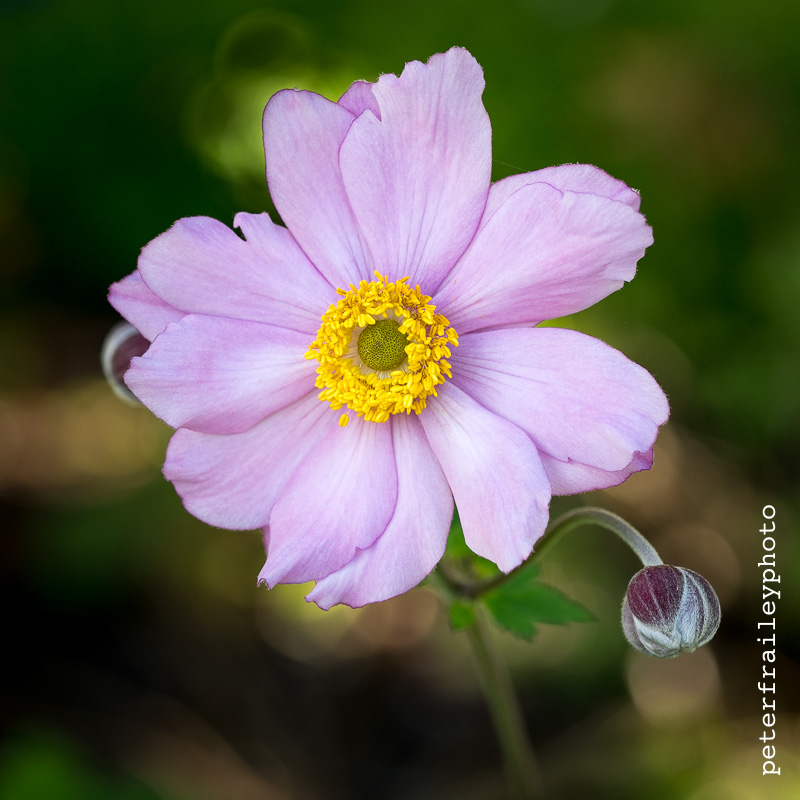
I did find one bed of pink flowers in the shade of some tall evergreen bushes.  I like the image below. You will see that there a no deep dark shadows on the flower, nor bright or blown out highlights.

With my mFT cameras (Panasonic and Olympus) I generally hope for enough light to shoot at ISO800 or less, and at a minimum shutter speed of 1/250 to account for possible plant movement. It is also be nice if I can get away with a aperture as small as F8, though I typically shoot wider open than that.  I might use F8 (on mFT) for the depth of field, but all too often F8 brings too much of the background in focus. 

Pink Flower
Panasonic GX80/85 with Olympus 60mm F2.8 Macro
1/160 sec, F4, ISO 200


This photo was taken at 1/160sec, F4 and ISO200.  It looks like I was shooting in aperture priority and neglected to see that the shutter speed was below my target minimum of 1/250 sec.  Nevertheless 1/160 was quite adequate for the day’s wind conditions.  Also, I was able to hold the camera very steady because I was sitting on an 8” stool with my elbows on my thighs.

But notice that although the flower was in shade, the background was not in the shade and was a bit blotchy with dark and bright spots... which I find annoying.  I did, however, use the radial tool in Lightroom to darken the area outside of the flower.


9.11.2017

Photo Story: Bee With a Coat of Pollen


What is so fun for me is that this potentially (I haven’t decided yet) portfolio photo was shot while out photographing motorcycles!  How interesting that the motorcycle photos are all snapshots and not worthy of a portfolio.  None of my car photos are worthy of a portfolio either, nor do I expect them to be; but it just seems so ironic that I would end up today with my favorite photo being a pollen-covered bee. The fact that this was not my intention makes it all the more special.  It’s sort of like pond fishing for sunfish and catching a beautiful little brook trout.  


Panasonic GX80/85 with Olympus 60mm macro
1/125, F5.6, ISO800
A circular polarizer was on lens but was ineffective at this angle.
The polarizer explains the ISO800 as it cuts 1.5-2 stops of light.

The morning had been spent at Larz Anderson Auto Museum for a lawn show called “European Motorcycles”.  It was a beautiful day and the place was packed with motorcycles both new and old from BMW, Triumph, Ducati, Norton, etc. I’ll be posting some of the photos later. I enjoyed a couple of hours walking around, taking photos, and chatting as best I could (as I know little about motorcycles.)

Halfway home I stopped at a small grocery store to buy a fresh cookie and a soda, and spotted a bench in a small park with blooming flowers. Perfect for sitting and eating a fresh-baked chocolate chip cookie!  As it happens, in addition to the Olympus E-M1 with 12-100mm zoom which was the combo I used for the motorcycle images, I had my new Panasonic GX80/85 with the Olympus 60mm macro attached.  Perfect!  

Scouting around I saw zillions of bees.  But looking closer, almost camouflaged, was this single bee covered with pollen.  I can certainly understand how this happens, because each little ball of pollen has little velcro-type protrusions, appearing under magnification like miniature thistles. But this was the only bee I spied with a coat of pollen.  He did not get it from this flower. My guess is that it came from entering one of the daylilies nearby.