Showing posts with label Olympus E-M1. Show all posts

12.23.2018

Inside at the botanic garden in November

Below is a set of images from the Tower Hill Botanic Garden, from a visit in November.  All were shot with an Olympus E-M1 and either the Olympus 12-100mm F4 zoom or the Olympus 60mm F2.8 macro lens.  All were shot at F4 and at a range of ISOs, depending on the amount and direction of light.

All were focus-bracketed with between 10 and 18 images and the camera was hand-held in all cases.  Processing was in Lightroom, and aligning the images and stacking was completed in Photoshop.

Cape Fuschia
10 focus-stacked images
Olympus 12-100mm

Indian Mallow
15 focus-stacked images
Olympus 60mm macro

Rosemary
17 focus-stacked images
Olympus 60mm macro

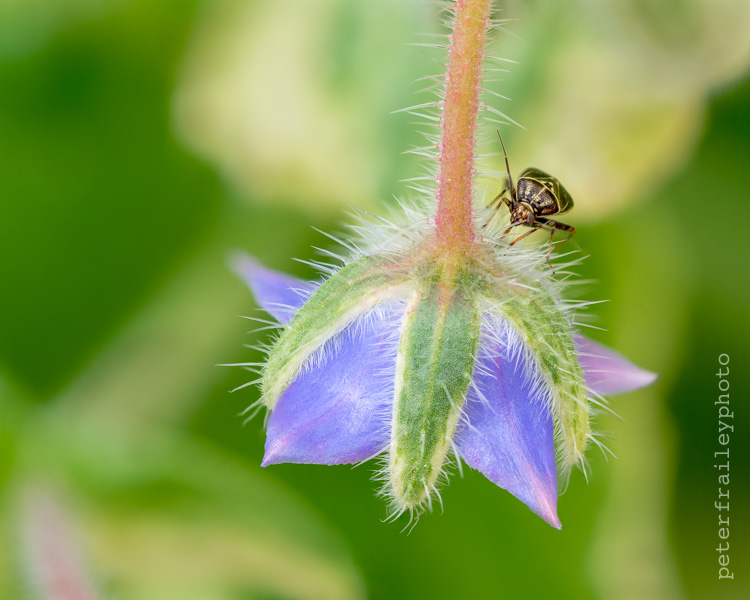
Forked Blue Curl
13 focus-stacked images
Olympus 12-100mm

Bougainvillea
9 focus-stacked images
Olympus 12-100mm


Croton
16 focus-stacked images
Olympus 12-100mm

Match Stick Flower
18 focus-stacked images
Olympus 12-100mm

Palm Frond
17 focus-stacked images
Olympus 12-100mm

10.08.2018

Focus Stacking a few September Flowers

During my one visit to the botanic garden in September I found myself rather disappointed.  Everything was beginning to look a bit ragged. I was nevertheless pleased with these images.
These flowers were photo stacked with between 5 and 12 images.  Whoops, the first one is a wild geranium and it is a single shot.

The lens used is an Olympus 12-100 (24-200mm equiv) F4 zoom.  The camera is my aging Olympus E-M1.  All were done at base ISO 200 and aperture was wide open at F4. All were hand held. Shutter speeds ranged from 1/250 to 1/640. Images were merged and edited in Lightroom Classic.

Wild Geranium (one image)

Phlox (12 images)

Verbana (5 images)

Marigold (9 images)

Anenome (10 images)

8.01.2018

Flower Photos from July


As it turns out all of my flower photos for July were taken during a two hour visit to Tower Hill Botanic Garden on July 14. It was a mid-day visit and the sun was high in the sky, but the light was nicely diffused.

Petunia
Single image. No focus stacking

Gazania
Single image. No focus stacking


All of these images were taken using an Olympus EM-1 and an Olympus 60mm (120mm-full frame equivalent) macro lens.  Two are single images and the other 19 are focus stacked with between 3 and 24 images. Using aperture priority, most were at F4 and a few were at F2.8.  There was plenty of light, so all were shot at my camera’s base ISO of 200.  Shutter speeds were “safe” speeds of from 1/160 to 1/2000sec, with most being between 1/500-1/800sec.

Water Lily
Three stacked images

Marigold
Seven stacked images

Mock Vervain
Seven stacked images

One thing I’ve been learning about focus stacking is that it is a l-o-n-g process.  Not so much in the field, as the auto stacking feature on the newer Olympus cameras works quite smoothly. But, it’s in post processing that a lot of time is required.  

Day Lily
Eight stacked images

Day Lily
Nine stacked images

Photoshop does a great job aligning the images. I'm thankful for that, as all of these images were taken hand-held. However, it takes quite a while for the Photoshop software to first align the images and then make a second run to blend them.  The photographer has to hang around to click various check boxes as the computer churns and churns. 

Leopard Lily
10 stacked images

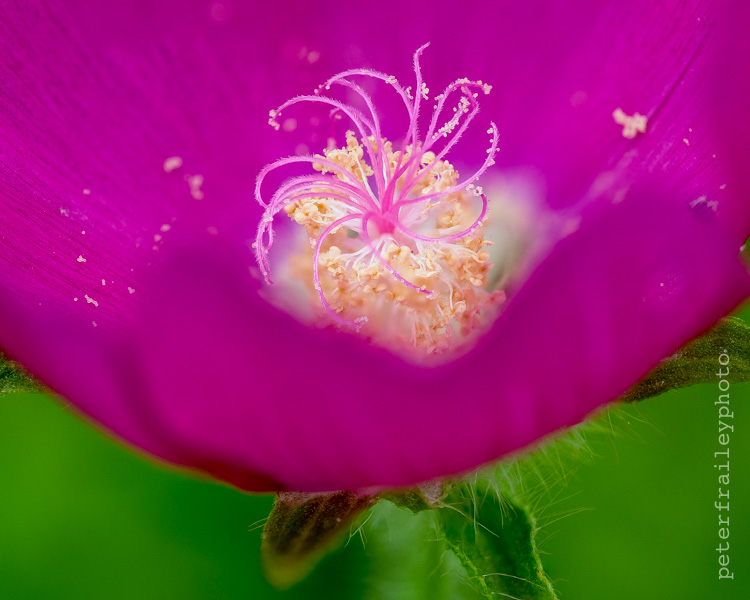
Poppy
11 stacked images

The results are quite startling to me.  Perhaps the thrill will wear off and perhaps eventually (soon?) I will decide it just isn’t worth the effort.  But right now I am finding it fun.

Mock Vervain
12 stacked images

Wild Geranium
13 stacked images

Although the shutter speeds I was using resulted in sharp images, it nevertheless took the camera 5 (?) seconds to record 25 images.  During that time there is inevitably some movement of the camera, as well as the flower. A tripod might help, but I didn’t use one during this outing.  A tripod would freeze the camera in one spot… though the flower will still move except on absolutely windless days.

Day Lily
15 stacked images

Fan Flower
17 stacked images


I’m not a tripod fan as it is, and the excellent alignment algorithms in Photoshop are making it easier and easier for me to leave the tripod in the car!

Egyptian Starclusters
18 stacked images

19 stacked images

Poppy
22 images

22 images

Insect on Flower
22 images

The Inner Workings
23 images

Bee on Flower
24 images


6.23.2018

My Toddler Granddaughter taught me how to use my Camera

My wife and I were visiting grandchildren yesterday and, as always, I brought along a descent camera hoping to grab one or two cute candid photos. The youngest of our three granddaughters loves to look at photos and watch videos on the back of smart phones and tablets.  And of course, she has also been intrigued by what the LCD on the back of my camera can offer.  


Yesterday’s visit reminded me of Christmas time, when after each click of the shutter she would toddle over to me, her thumb in her mouth, and bend her neck around without making a sound, to see what was on the screen.  She would take her sticky right forefinger and touch the LCD (you wouldn’t believe the fingerprints!), and began swiping through the pictures.  I just laughed.


The funny thing is that I had never tried that on my camera.  And, to be honest, I didn’t even know I could do that!  

So, there you have it.  I learned something about my camera from a one-year old.

[I shared this story with my friend, Hans, and he told me of a video he had seen of a two-year old trying to swipe the cover of a coffee-table book.  I am happy to say that all of our grandchildren have been well connected to books.]

12.09.2017

Olympus E-M1 Is Back From the Repair Shop


I’m pleased with the turn-around time on the repair of my EM-1, and the repair cost was reasonable.  Unfortunately, the warranty had long expired, as I’ve owned and used the camera since December of 2013, the first month it became available.


Received! (Note that it arrived wrapped in bubble wrap for safe transport)

Here’s the problem I was having (for several months), as I described it on the repair order. 

“Camera is kept with mode dial in Aperture (A) Priority. However, most of the time when the camera is powered up, it is actually then in Program Mode as this is indicated in the lower left corner of the LCD. And the dials operate indeed as in the "P" mode. To change to "A" mode I need to click the physical mode dial either clockwise or counterclockwise to any other mode, then click it back to "A" mode. Very annoying.”

Once Olympus received my camera at the repair center in New Jersey, I was notified of the price for repair ($190) by logging into their website. I quickly approved the repair, as that price seemed fair and reasonable for a four year old camera. I received the camera via UPS ten days later. That, too, seemed reasonable. Your mileage may vary, but I’m happy.

I'm looking forward to "re-assembling" with my default lens, the 12-100, and RRS grip.


However, I’m not sure what was actually wrong with the camera. The receipt says “normal repair” and mentions that they “replaced the rear dial, rear cover and grip”. That appears to be the case, assuming “grip” means rear grip (the rubberized area under the right thumb). I notice the replaced rear dial because the “OK” is visible, whereas the lettering on the old OK button had been almost completely scratched off from pressing the button with my thumb nail.

My guess is that a technician removed the back of the camera, gained access to the insides of the camera, repaired something electrical, and sealed it all up with new parts. I’ll assume the new rear dial, new back grip, and new back were necessary for a quality repair. 


9.21.2017

Photo+Story: Backlit Flowers on Sunny Days

In my prior post I was bemoaning sunny days when out shooting flowers at our local botanic garden, and I suggested that finding a few flowers in the shade was a good option.  But I thought of something else that worked for me on Sunday.

I remember walking through the gardens looking at flowers and seeing behind the flower beds a group of palm leaves (or similar plant) growing out of one of those big 18" diameter clay pots.  With the powerful sun lighting them from behind they appeared very colorful, and certainly bright enough to attract my attention.  So, I am thinking that backlit flowers would be a good theme or project on sunny days.  I need to remember that for the next time I feel like photographing flowers and it is a sunny day.

For these images I put the Panasonic GX80/85 with Olympus 60mm macro in my backpack, as the prime lens did not have enough reach, and pulled out my E-M1 with Olympus 12-100mm F4.  Even zoomed in at 100mm (200mm equivalent) this image is cropped a bit.  One reason I always bring a zoom with me is that botanic gardens have rules about walking on the paths only. This means if the desired flower or subject is off the beaten path, you have no option but to go for a longish zoom or telephoto lens.

Backlit Palm Leaf
Olympus E-M1 and 12-100mm F4 @ 100mm

1/250 sec, F8, ISO 400

12.12.2016

One year with the versatile Panasonic 14-140 v.2


This blog post has been modified slightly from an article I wrote in November which was published by Heather and Mathieu of mirrorlessons.com.  The article can be found by clicking here.

“Washington Farmland”
1/250, F8, ISO 200, @65mm

In December of last year I decided it was a good time to add to my mFT lens collection.  As a bit of background, I also use Sony and Fuji mirrorless gear, but most of my equipment is mFT, having owned several Panasonic and Olympus cameras and a bunch of mFT lenses. As I write this article, my only mFT camera is the Olympus EM-1, a lovely and hugely capable camera which I have owned since it first become available.


That said, in December last year I decided that my new lens would be the Panasonic 14-140mm F3.5-F5.6. This is the second version of the 14-140. I’d been thinking about adding this lens configuration (28-280 mm equivalent) for quite some time, as I know so many people who have enjoyed these so-called "super zooms", especially for travel. An all-in-one lens is a very attractive choice when you want to travel light and simple. 

When the first Panasonic mFT version of the 14-140 was introduced in 2009 (with a slightly slower aperture of F4-F5.8), I was interested. But at an initial offering price of about $700, I was not interested enough to pull out the credit card.


“Golden Mantel Ground Squirrel at Mount Saint Helens”
1/400, F5.6, ISO 200, @140mm

Version 2 came along in 2013.  It has a lot going for it: a stepper motor, better optical image stabilization, a slightly faster lens, smaller, lighter, sharper in the corners (though arguably less sharp in the center according to at least one review), 58mm filter threads instead of 62mm, 1:4 (1:2 equivalent) magnification instead of 1:5, and closer minimum focusing distance. Looking back, I'm surprised I resisted. 


E-M1 plus 14-140 plus Really Right Stuff L-bracket 
A nicely balanced setup
Note: Though pictured here without the lens hood, I always use it.

Well, last December I saw the lens from a high quality N.Y. vendor for a $200 savings plus 4% rewards… and that had me smiling big time.  Out came the credit card. Ever since then, this lens has been almost permanently attached to on my E-M1.


“Lobster Boat in Morning Light” 
1/640, F5.6, ISO 200, @140mm

How good is this lens?

My immediate response is “good enough”.  I’m happy with the images I have taken, at least when it comes to the lens’ contribution to the image pipeline. But I should say that based on my personal experience, it is not quite as sharp as the PRO 12-40 F2.8 by Olympus or the 35-100 F2.8 by Panasonic. The 14-140 is light and small and I view this as a positive; however, on the flip side it does feel a bit more “plastic-y” than I had hoped. I suppose light, small and plastic go hand-in-hand. That being said, the parts fit together well and the focus and zoom rings are pretty smooth. There is a metal lens mount, as one would guess for a lens of this price.


“Sea Smoke at Sunrise”
1/2500, F5.6, ISO 200, @140mm


Lens sharpness is always a primary concern, though folks will argue about how sharp is sharp enough.  For me, this lens is sharp enough for 95% of the pictures I take. I say 95% because if I see a shot that has a chance to be a “portfolio shot” (the other 5% of my images and likely far fewer) I will want to switch the 14-140 for the sharper and faster 12-40 or 35-100, assuming I even have these two lenses with me at the time. I do, however, realize that in most cases it will not make a difference in the appeal-factor of the resulting image…perhaps until you start printing bigger than 12’ x 18”.  


“View From Cadillac Mountain, Mt. Desert Island”
Shot toward the sun, 1/800, F8, ISO 200, @73


Other than that, for downsides I do notice some occasional vignetting which has always been fixable in post, and some annoying difficulty in finding focus at infinity when using small size apertures. It is especially annoying when using a polarizer, which of course reduces the amount of light reaching the sensor, artificially creating a low-light (or at least lower-light) situation. The work-around for me is to simply switch to manual focus when the occasional situation requires it.  (These comments are based on my experience with the lens on an Olympus body.  I suppose it might be possible that the focusing issue is non-existent on a Panasonic body.)


“Yellow Sailboat”
1/200, F5.6, ISO200, @97mm


The versatility of the 14-140 is very comforting. And, amazingly, it only weighs 9.3 ounces or 265 grams, and measures only 3.25” in length when retracted (full expansion is 5“).


“Soup and Sandwiches”
1/320, F5.6, ISO 200, @37mm


“Farmer’s Market, Bath, Maine”
1/160, F8, ISO 1000, @73mm


I love this lens for travel and landscapes.  For this I typically shoot at F4 (where available at the wider end of the zoom) through F8, depending on the desired depth of field.  I generally shoot in aperture priority and auto ISO. 


“Rainforest, Olympic National Park”
1/30, F8, ISO 3200, @14mm

The macro capabilities are excellent.  I take a lot of flower images in botanic gardens where one needs to stay on a walkway.  The fact that this lens has ample magnification (1:4 which is equivalent to 1:2 on a full frame camera) when fully zoomed to 140mm is fantastic for these situations. You can get a flower closeup image without getting, well, close up. Generally for flowers I shoot wide open and at least 1/200th.  That shutter speed might seem high, but all my flower work is outdoors and there is always some air movement.


“Brown Eyed Susan”

1/400, F5.6, ISO 400, @125mm


“Tulip”
1/200, F5.6, ISO 400, @140mm
  

I am so confident in this lens that in June, on a two week mobile home vacation in the state of Washington, this was the only lens I took for the E-M1.  Even the 12-40 stayed home!  (Having said that, I also had a Fuji X100T, a fixed lens camera with a 35mm equivalent lens.)


“Lake Diablo”
1/200, F8, ISO 200, @14mm


“Mount Rainier”
1/1250, F4, ISO 200, @14mm


The images shown above were all taken over the last 12 months and were picked to show the versatility and capabilities of the 14-140.  Post-processing is in Lightroom CC. Most of my images are taken at base ISO of 200.  There are a couple here shot at ISO 400 and 1000.  The one taken in the rainforest of Olympic National Park was at ISO 3200. 

I have a larger collection (70) of higher resolution images taken with this lens on my Web site.  Here’s the link to that collection: