Showing posts with label tower hill botanic garden. Show all posts

12.23.2018

Inside at the botanic garden in November

Below is a set of images from the Tower Hill Botanic Garden, from a visit in November.  All were shot with an Olympus E-M1 and either the Olympus 12-100mm F4 zoom or the Olympus 60mm F2.8 macro lens.  All were shot at F4 and at a range of ISOs, depending on the amount and direction of light.

All were focus-bracketed with between 10 and 18 images and the camera was hand-held in all cases.  Processing was in Lightroom, and aligning the images and stacking was completed in Photoshop.

Cape Fuschia
10 focus-stacked images
Olympus 12-100mm

Indian Mallow
15 focus-stacked images
Olympus 60mm macro

Rosemary
17 focus-stacked images
Olympus 60mm macro

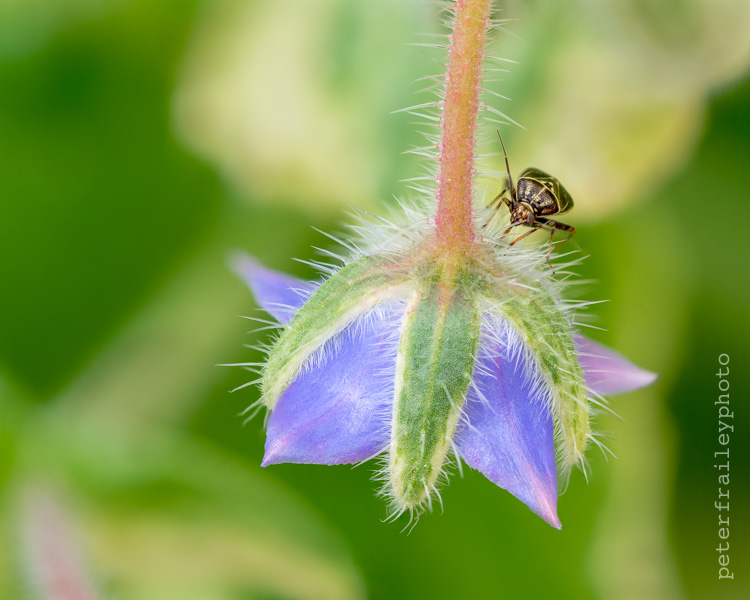
Forked Blue Curl
13 focus-stacked images
Olympus 12-100mm

Bougainvillea
9 focus-stacked images
Olympus 12-100mm


Croton
16 focus-stacked images
Olympus 12-100mm

Match Stick Flower
18 focus-stacked images
Olympus 12-100mm

Palm Frond
17 focus-stacked images
Olympus 12-100mm

10.08.2018

Focus Stacking a few September Flowers

During my one visit to the botanic garden in September I found myself rather disappointed.  Everything was beginning to look a bit ragged. I was nevertheless pleased with these images.
These flowers were photo stacked with between 5 and 12 images.  Whoops, the first one is a wild geranium and it is a single shot.

The lens used is an Olympus 12-100 (24-200mm equiv) F4 zoom.  The camera is my aging Olympus E-M1.  All were done at base ISO 200 and aperture was wide open at F4. All were hand held. Shutter speeds ranged from 1/250 to 1/640. Images were merged and edited in Lightroom Classic.

Wild Geranium (one image)

Phlox (12 images)

Verbana (5 images)

Marigold (9 images)

Anenome (10 images)

8.27.2018

Photography can be a bit like Fly Fishing. Really.


I decided to visit our local botanic garden for a few hours last weekend.  The sky was a bit hazy which makes for nice diffused light (though it did unfortunately clear up somewhat once I got there), and the wind was light. The air temperature was delightfully in the 70s and the humidity was not quite at the “uncomfortable” level.  It was quite an enjoyable visit, with lots of happy people walking around, including many kids on what seemed to be a scavenger hunt. 


We’ve had a lot of heat this summer and recently some very heavy rain.  The result of this is that the flowers during this visit generally looked a little beaten up. But I was able to shift gears to the insect life.  I’m not a huge fan of getting close to bees, but with my 12-100mm Olympus lens (24-200mm equivalent)  I felt I could shoot from a safe distance.  Plus I think the bees were a lot more interested in the flowers than in me!  The long zoom also helped with the butterfly photo.  Had I brought two cameras I would have put my Olympus 60mm macro on the second camera, as I would have liked to have been closer to the spider.


It was not until I got back home and viewed my 300+ images, and found a mere 9 that I thought were “good”, that I began comparing my outing at the botanic garden with fly fishing.


Think of the 300 shutter actuations I made, as I walked among the flowers, as similar to perhaps 300 casts with my fly rod, as I walked up and down the river.  Then think of the 300 captures (i.e. photos) as similar to a pile of caught fish, or at least bites or nibbles.  (Actually, 300 fish - one on every cast - is unlikely).  The 9 good images are like 9 good-sized fish, the other 294 fish being thrown back into the river, and the other 294 images being deleted.  What you see in this blog post are those 9 photos.


There are plenty of other similarities.  Both activities provide recreation by offering an opportunity to get outdoors and to be in nature.  The camera is similar to the fly rod and reel… all being nice pieces of modern technology, designed to capture the subject of your adventure.  The camera backpack with assorted lenses and accessories is like the fly fishing vest full of flies and accessories.  Perhaps, too, the art of post processing one’s images can be compared to the art of tying one’s own flies.


Enough said about fly fishing.

The image below is my favorite image of the set.  It is the crab spider I mentioned above. Using my fishing analogy, this would be the biggest trout of the outing.  What I like so much about this photo is the nature story.  And actually, I saw this capture happen.  

I was looking down on the flower and saw the fly about to land.  I heard a snap as the "claws" of the spider snapped shut on the fly.  As far as I can tell there are no webs for the crab spider to catch his prey.  Instead he patiently awaits for a fly to come within his range.  The two most-forward legs on each side are held wide open like a crab with claws. Each pair of legs appear to be glued together, making it look like there are only two claws, one on each side.  (Though the spider is no longer "in wait", you can see that his left forward two legs are held together.) These legs/claws snapped shut as fast as one of those spring-loaded mouse traps, and instantaneously pulled the fly into the spider's mouth.


8.01.2018

Flower Photos from July


As it turns out all of my flower photos for July were taken during a two hour visit to Tower Hill Botanic Garden on July 14. It was a mid-day visit and the sun was high in the sky, but the light was nicely diffused.
Petunia
Single image. No focus stacking

Gazania
Single image. No focus stacking


All of these images were taken using an Olympus EM-1 and an Olympus 60mm (120mm-full frame equivalent) macro lens.  Two are single images and the other 19 are focus stacked with between 3 and 24 images. Using aperture priority, most were at F4 and a few were at F2.8.  There was plenty of light, so all were shot at my camera’s base ISO of 200.  Shutter speeds were “safe” speeds of from 1/160 to 1/2000sec, with most being between 1/500-1/800sec.

Water Lily
Three stacked images

Marigold
Seven stacked images

Mock Vervain
Seven stacked images

One thing I’ve been learning about focus stacking is that it is a l-o-n-g process.  Not so much in the field, as the auto stacking feature on the newer Olympus cameras works quite smoothly. But, it’s in post processing that a lot of time is required.  

Day Lily
Eight stacked images

Day Lily
Nine stacked images

Photoshop does a great job aligning the images. I'm thankful for that, as all of these images were taken hand-held. However, it takes quite a while for the Photoshop software to first align the images and then make a second run to blend them.  The photographer has to hang around to click various check boxes as the computer churns and churns. 

Leopard Lily
10 stacked images

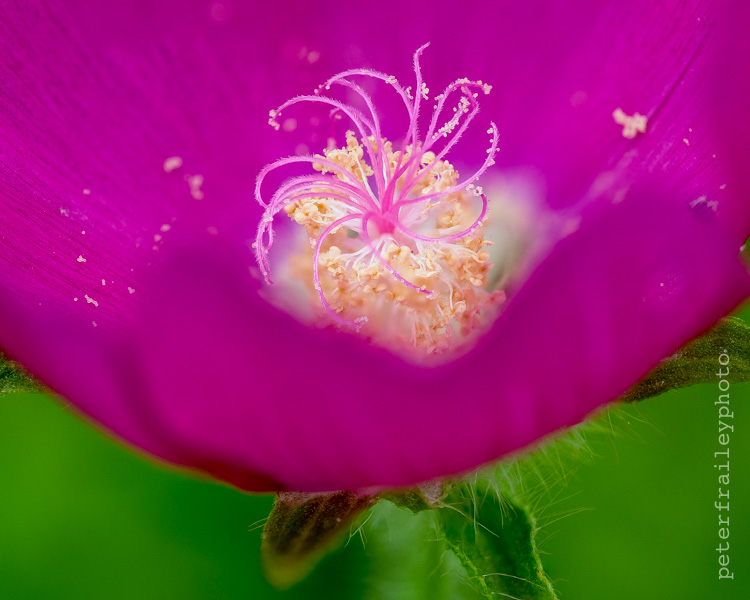
Poppy
11 stacked images

The results are quite startling to me.  Perhaps the thrill will wear off and perhaps eventually (soon?) I will decide it just isn’t worth the effort.  But right now I am finding it fun.

Mock Vervain
12 stacked images

Wild Geranium
13 stacked images

Although the shutter speeds I was using resulted in sharp images, it nevertheless took the camera 5 (?) seconds to record 25 images.  During that time there is inevitably some movement of the camera, as well as the flower. A tripod might help, but I didn’t use one during this outing.  A tripod would freeze the camera in one spot… though the flower will still move except on absolutely windless days.

Day Lily
15 stacked images

Fan Flower
17 stacked images


I’m not a tripod fan as it is, and the excellent alignment algorithms in Photoshop are making it easier and easier for me to leave the tripod in the car!

Egyptian Starclusters
18 stacked images

19 stacked images

Poppy
22 images

22 images

Insect on Flower
22 images

The Inner Workings
23 images

Bee on Flower
24 images


7.11.2018

Photo Stacking for June Flowers

I did a lot of focus bracketing and stacking in June. Most of the 18 flower images below were taken at a local arboretum and a local botanic garden.  A few were in our yard.  I used mFT camera bodies by Olympus (E-M1) and Panasonic (GX80/85).  Most were taken with the Olympus 60mm macro lens.  Some were taken with the Olympus 12-100mm zoom.  


Both my Olympus and Panasonic cameras have a focus bracketing feature that allows me to focus on the closest part of the flower with the first shot, followed automatically by sequentially further-focused shots.  The beauty of this feature is that this is done with one press of the shutter and at a speed of approximately 10 frames per second.


May's images and post about photo stacking flowers mentioned I had assembled the May images using Zyrene Stacker. In June I instead used photoshop, and I prefer the results it gave me. And of course, for those who already subscribe to Photoshop and Lightroom, there is not the additional expense of buying a plug-in like Zyrene Stacker.


Basically, I find Photoshop does a better job aligning the flowers.  As a result there is rarely any ghosting, something I more than occasionally found using Zyrene Stacker.


Generally, I shot 20 images at a time, starting by focusing on the closest point of the flower.  In Lightroom I viewed each image and deleted any that were focusing further than the farthest point of the flower.  In some cases all 20 images were useable.  In one case, I only used the first seven images.


In all but two of these stacked images I shot wide open at F2.8 (60mm macro) and F4 (12-100 zoom).The two exceptions were at F4 on the macro lens.

Nine more:


With a couple of exceptions I sought hazy or cloudy days.  Light of any kind is good, but diffused light is the best!